The AI Field Guide: Systems, Strategy, Scale
Blueprints and best practices for those turning AI from concept to capability.

When Overemployment Became an Identity Problem
Remote work and overemployment created an identity gap. North Korean IT-worker operations and AI-assisted hiring fraud show why valid credentials are no longer enough — employers must verify the person behind the account.

Trust and Authority eroded by AI poisoning
AI search poisoning is emerging as a serious risk as brands and scammers use Reddit, Wikipedia, and other user-generated platforms to influence AI-generated answers — and what WARP means for enterprises deploying deep-research agents.
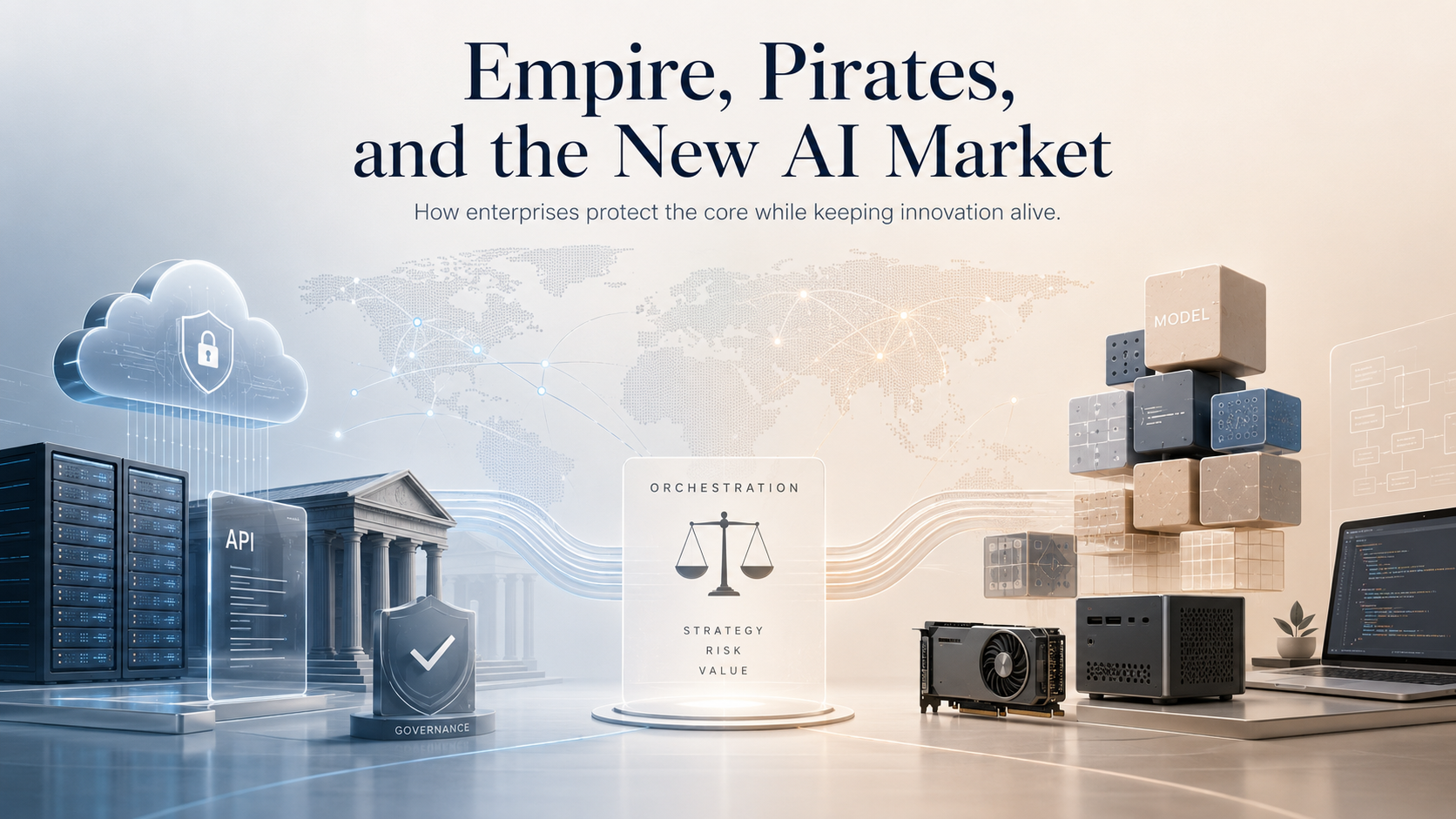
Empire, Pirates, and the New AI Market
Why the next phase of AI strategy is about infrastructure, sovereignty, and keeping internal innovation alive — closed frontier APIs versus open weights, Google's dual-market play, and the empire-and-pirate-ships model for CTOs.

The "Morse Code" Heist: Why Banking's Next Cyber Threat Won't Look Like Hacking
What is authority laundering? A case where a valid blockchain transfer still reflected a governance failure: AI decoded hostile Morse-code-style input into plain-language instructions, expanding wallet powers and the language-layer risk for banks, insurers, and agentic fintech. Models propose; policy and tools must decide and enforce.
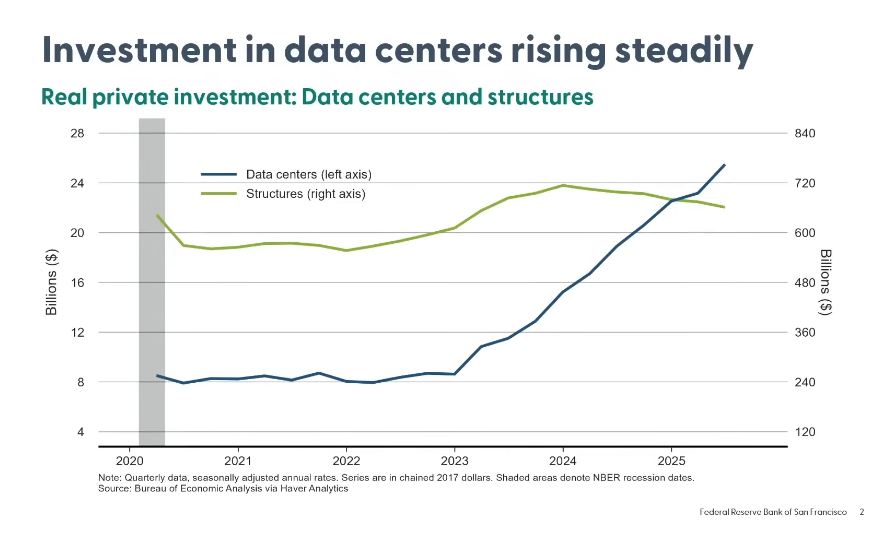
The Industrialization of Intelligence (and Why ROI Is Now the Only Story That Matters)
From the Phoenix Project to Fed-backed macro charts: why AI is becoming operational infrastructure—and why ROI, not demos, is the only story that scales.

The Subprime Pattern in AI Isn't Theoretical Anymore
Operators are shifting from capability to cost and from possibility to sustainability. The AI cycle increasingly resembles structural dynamics from the subprime era—not because models fail, but because economics may detach from reality.

AI Governance, Information Warfare, and the Domestic Narrative Layer
How artificial intelligence has changed the mechanics of influence—and why democratic societies must rethink information resilience in the age of algorithmic distribution and generative media.

Quiet Technology for People Who Question Authority
Practical tools that work without permission, platforms, or subscriptions. A tour of mesh messaging, solar-powered nodes, ESP32 hardware, satellite weather data, and tinker-friendly routers that trade platforms for participation and clouds for local control.

The Builders Are Becoming Leaders Again
Why the AI era is forcing a reckoning inside technology leadership. The leaders who succeed will be defined by their fluency, not their titles.

Flock Safety: AI Surveillance Vulnerabilities
Artificial intelligence now sits at the center of modern policing. When surveillance devices are compromised, the risk is not only unauthorized access—it is AI poisoning, model manipulation, false classification, and the corruption of the digital record that AI systems depend on to make decisions.

The Next Frontier of Civic Activism: Using AI to Keep Democracy Honest
Every election season feels the same. The noise gets louder, the facts get thinner, and by the final week, voters are trying to separate real choices from manufactured narratives. AI can help fix that, but not in the way people think. It's about giving citizens a better lens — a way to see through the slogans and measure consistency, performance, and credibility over time.

Smart Cities Start Small: How Buffalo Can Lead the Next Wave of AI Adoption in Local Government
A civic-minded perspective on how Buffalo can lead AI adoption in local government through transparency, efficiency, and accountable modernization.

The Ten Papers That Shaped Modern AI Engineering
A comprehensive reading roadmap covering the foundational research papers that define modern AI—from transformers and few-shot learning to RLHF, RAG, LoRA, and the Model Context Protocol. Essential knowledge for every AI engineer.

The Startup Test
After meeting nearly a thousand founders at Y Combinator, Hodge believes the trait that matters most isn't brilliance or bravado. It's resilience — the capacity to be punched in the face by reality, reorganize your thoughts, and keep building.

Trust Is the Product
The story everyone hears is the headline: a company builds an AI app, rides a wave of hype, and sells for hundreds of millions. It sounds effortless, like luck wrapped in genius. The truth behind those numbers is far less cinematic.

The OS for Lawyers Is Coming
I keep hearing that law is slow to change. Spend five minutes with a frustrated junior who just slogged through a month of case summaries and you will see the crack in that story.

Software 3.0: A field guide to building in the age of AI-native code
When Andrej Karpathy walked on stage, he did not try to dazzle with a new self-driving milestone. He offered something more provocative. Software is changing again, he said, and this time the shift is not a new language or a shiny framework. It is a change in what we mean by "program."

The One Number That Builds Everything
Most founders spend too much time chasing complexity. They overthink strategy, rewrite plans, and tinker with decks. But business, when you strip it all down, runs on one number — growth. Not the vague kind. The measurable, weekly kind.

How to Think About Startup Ideas That Actually Work
Every founder eventually reaches the same moment. You sit there staring at a blank page, trying to imagine an idea that could become something real. Not just a product, but a business.

Why Every AI You Hear About Uses "Transformers" — and Why That Matters for Sales
Understanding the Transformer architecture that powers ChatGPT, Claude, and Gemini — and how to use this knowledge to sell AI products more effectively to business audiences.

Reimagining Buffalo's Transportation Department: From Fleet Management to Civic Intelligence
How Buffalo's Director of Transportation role could serve as the blueprint for modernizing public operations through data integration, automation, and civic transparency.

How to Build a Startup That Survives the AI Gold Rush
Startup veterans unpack what founders keep getting wrong about markets, hiring, and the myth of the perfect AI idea.

Lessons from the AWS Outage: Building Real Resilience in the Cloud
The recent AWS outage in US-East-1 region disrupted major services across finance, gaming, IoT, and communications platforms. Learn how to build truly resilient cloud architectures that can survive regional failures.

The Dead Internet Theory: When AI and Money Replace the Human Web
The internet still hums with activity, but behind all that motion, something feels still. The Dead Internet Theory suggests that what we are watching is not a living network of human conversation but a simulation of it, driven by algorithms, artificial intelligence, and profit.

The Jevons Paradox in Artificial Intelligence: A Radiology Case Study
When AI reduces the cost and friction of performing complex cognitive tasks, it triggers a demand-side expansion known as Jevons Paradox. This paper explores how AI-driven efficiency in radiology has increased access, throughput, and clinical value rather than reducing workforce demand.

A Founder's Note — to My Future Self
On staying human while building intelligent things. A reflection on authenticity, AI adoption, and the emotional continuity that separates great products from merely functional ones.
Microsoft AI Foundations: Part 2 - Core AI Services
The intelligence layer of Microsoft's AI stack—Azure OpenAI Service, Cognitive Services, and the API surface of cognition for enterprise-grade AI applications.
Azure AI Strategy - Part 1: Infrastructure
Understanding Microsoft's supercomputing backbone for AI—GPU hardware, distributed compute, storage optimization, and HPC architecture patterns for LLM workloads.
Public Works and Infrastructure Data: The Hidden Machine of Winter Government
How AI and automation can transform municipal operations from snow removal to fleet management—building trust through transparency.
The Next Frontier of Automation: n8n vs OpenAI's AgentKit
A strategic analysis of two divergent paths toward AI-driven operations: control with n8n or convenience with AgentKit.
The AI Reckoning: What Happens After You Automate?
A strategy cheat sheet for founders, CTOs, and business leaders navigating the post-automation landscape and redefining value in an AI-driven world.
Building Moats at the Speed of AI
How to turn breakthrough AI technology into a durable business using Hamilton Helmer's Seven Powers framework for building lasting competitive advantage.
The House of Cards: The Fragile Security of Modern AI Systems
A comprehensive analysis of AI security vulnerabilities, from adversarial inputs to supply chain attacks, with practical defense strategies for enterprise systems.
AI Security Countermeasures — Developer Reference
A practical developer guide with code examples, monitoring strategies, and operational procedures for implementing AI security controls.
How AI Agents Talk: Google's A2A Protocol Explained
How Google's open A2A protocol enables interoperable, auditable collaboration between enterprise AI agents across frameworks and vendors.
Memory Is the New Intelligence: How Retrieval and Reasoning Are Redefining AI
Why the next evolution of AI isn't about bigger models — it's about better recall.
The Context Battle: From SEO to AEO and GEO
How the logic of the web is being rewritten by machines that no longer search — they understand. A deep dive into Answer Engine Optimization and Generative Engine Optimization.
From Reactive Ops to Continuous Recovery
A leadership playbook for self-healing cloud infrastructure that detects failure, responds in context, and recovers without human intervention.
Choosing Your Agent Framework: Microsoft, CrewAI, or LangChain?
A comprehensive guide for CIOs and CTOs on selecting the right AI agent framework for enterprise deployment.
Vector Databases: A Technical Comparison
Comparing Pinecone, Weaviate, Chroma, and other vector database solutions.
AI Model Optimization Techniques
Quantization, pruning, distillation, and other optimization strategies for AI models.
AI Frameworks: A Comprehensive Overview
Deep dive into the major AI frameworks including TensorFlow, PyTorch, Hugging Face, and LangChain.
LLM Deployment Strategies: From Development to Production
Best practices for deploying large language models in production environments.
AI Ethics and Governance in Production
Implementing ethical AI practices and governance frameworks in enterprise environments.
AI Model Monitoring and Observability
Building robust monitoring systems for AI models in production.
Stay Updated on AI Tech
Get notified when new articles are added to this knowledge repository. Stay ahead of the curve with the latest AI frameworks, best practices, and insights.